Cosmetic dentistry lead generation works when follow-up, landing pages, and case acceptance align. See the funnel math and benchmarks that decide ROI.
Last Updated: November 1, 2026
Quick Summary
Cosmetic dentistry lead generation works when you treat it as a full funnel instead of a traffic tap, tracking every step from first click to signed treatment plan. Measure cost per acquired patient against treatment margin, and fix funnel leaks before buying more leads.
Yes, cosmetic dentistry lead generation works, but only when you treat it as a full funnel instead of a traffic tap. The U.S. cosmetic dentists industry reached $7.6 billion in revenue in 2026, with 6,520 businesses and a 1.4% compound annual growth rate since 2021, according to IBISWorld's U.S. cosmetic dentists industry data.
Here is the catch most guides skip. The practices that win are not the ones spending the most on ads. They are the ones that manage every step from first click to signed treatment plan.
A lead is not a patient until someone sits in the chair and says yes to a treatment plan.
So does cosmetic dentistry lead generation work? It does, if you build it as an operating system, not a campaign.
Most articles answer "does cosmetic dentistry lead generation work" with a yes and a list of tactics. That is not an answer a practice owner can act on. The useful answer is a set of numbers: what a lead costs, how many become consults, how many consults become treatment, and where the money leaks out. Build that model once and the yes-or-no question answers itself.
A "lead" is the least useful unit in cosmetic dentistry because the spread between a form fill and an accepted veneer case is enormous. Track four stages separately:
A campaign can look healthy at stage one and be worthless at stage four. If you only report leads, you cannot tell the difference.
Exact numbers vary by market, offer, and price point. Rather than relying on benchmark ranges, measure these conversion steps in your own practice.
Run your own numbers for 60 to 90 days before judging a channel. Early data is noisy, and cosmetic decisions are slow.
You do not need a marketing platform to answer whether lead generation pays. You need four inputs and one output.
Then work backward. If your average accepted case is worth a given amount at your margin, and you close a known share of consults, and a known share of leads become consults, you can calculate the maximum cost per lead you can afford before the campaign loses money.
Pro Tip
Calculate cost per acquired patient, not cost per lead. A $200 lead that becomes a $20,000 case is cheap; a $40 lead that never books is expensive. The lead price tells you almost nothing on its own.
In most cosmetic funnels, the largest losses are not in the ad account. They are between stages:
Measure each leak as a percentage, fix the worst one first, and re-run the model. That is what separates practices that can prove lead generation works from practices that merely believe it does.
Key Takeaway
"Does cosmetic dentistry lead generation work" is a math question, not a marketing opinion. Define success at the accepted-treatment stage, benchmark each conversion step, and compare cost per acquired patient to treatment margin. If the unit economics clear, the channel works; if they do not, fix the funnel before you buy more leads.
Track these four funnel stages separately, because a campaign can look healthy at stage one and be worthless at stage four.
Cosmetic patients shop differently than emergency patients. They research, compare, and hesitate, and they often inquire at night after the family is in bed. That changes which channels are worth your money and how you should judge the leads each one produces. Instead of a list of tactics, compare channels on the dimensions that decide whether lead generation works for your practice: cost, speed to results, how much control you keep, and the intent of the leads you get.
A practical pattern is to run one paid channel for speed, one organic channel for durable cost per lead, and reputation work underneath both. Add lead services only where you have capacity to work the leads fast.
Cosmetic lead generation fails most often because unqualified inquiries consume the front desk's day. Build a short qualification step into every form and call:
Qualification is not gatekeeping. It lets you route high-intent inquiries to a live call and nurture the rest with email or text instead of burning hours on patients who are months away.
Cosmetic inquiries involve health-adjacent information and often photos, so treat data handling as part of the funnel, not an afterthought:
Watch Out
A cheap lead list that arrives without documented consent is not a bargain. Non-compliant outreach can create legal exposure that dwarfs the cost of the leads, and it damages the practice's reputation with exactly the high-value patients you are trying to attract.
High-value cosmetic cases reward patience and follow-up, so weight your mix toward channels that produce identifiable, treatment-specific intent and give you control over the message. Emergency and general dentistry can tolerate broad, cheap traffic; veneers and full-mouth cases usually cannot. Review cost per acquired patient by channel every quarter and shift budget toward the channels that clear your break-even model.
A converting landing page does one job: it turns a curious visitor into a booked consult. The best cosmetic dentistry landing page examples share three traits. They show a real result, they remove risk, and they make the next step obvious.
What to put on the page:
This is where a tool like the chairside simulator earns its place.
Speed decides outcomes. A high-intent lead who waits a day for a reply has usually already booked elsewhere.
Use scripts that sound human, not automated:
For a full system on chasing unscheduled treatment and no-answer leads, read our guide on how to follow up on unscheduled dental treatment.
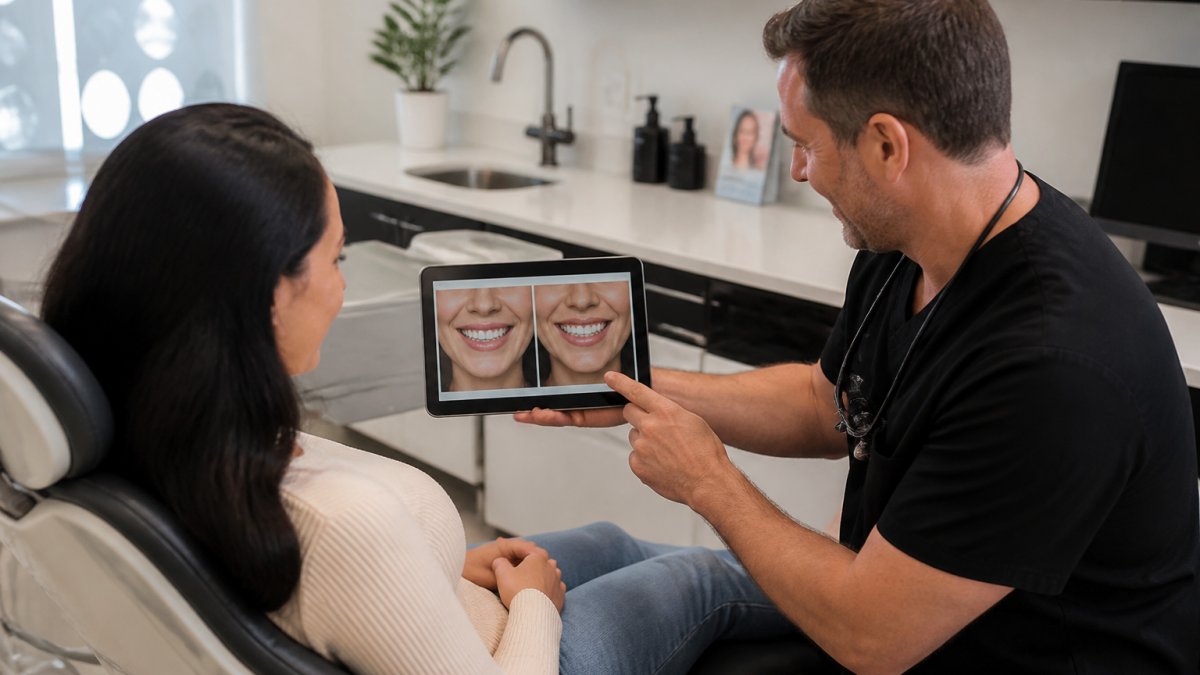
Case acceptance is won or lost in the consultation, not the ad. The single biggest lever is letting patients see the outcome before they commit.
Three moves that raise acceptance:
SmileViz was built for exactly this moment. Our AI-powered smile simulation shows patients their future smile in seconds, right at the chair. For the full playbook, see how to increase case acceptance in cosmetic dentistry.
The fastest way to answer "does cosmetic dentistry lead generation work" is to test the last step yourself. If your consult closes, your funnel pays. If it stalls, no amount of ad spend fixes it.
SmileViz offers real-time AI smile simulation designed for chairside use, and it can start the conversation in the waiting room. Dentists and labs love SmileViz.
It works when the practice treats it as an operations problem, not a traffic problem. Paid search, local SEO, reviews, and social campaigns can produce inquiries, but the return depends on response time, follow-up, and case acceptance. The return depends on how well the practice aligns its marketing with response time, follow-up, and case acceptance.
There is no single universal benchmark, so calculate your break-even instead based on your own case values and close rates. Track cost per lead, cost per consultation, and cost per case together. A cheap lead that never books is more expensive than a higher-priced lead that shows up.
Faster than your competitor. High-intent cosmetic inquiries often contact two or three practices at once, so the first office to respond usually sets the appointment. Build a rule that every web form and call gets a response within minutes during office hours and a callback first thing the next morning. Use dental lead follow-up scripts that confirm the patient's goal, offer two specific consultation times, and mention the smile simulation so the visit feels concrete.
Measure the whole funnel, not just clicks. Track lead volume by channel, response time, consultation booking rate, show rate, case acceptance rate, and average case value. Compare cost per booked consultation against your break-even figure. A campaign that produces fewer leads but more full-arch and veneer cases can beat a high-volume campaign of price shoppers. Review the numbers monthly and cut channels that fail two cycles in a row.
Show the outcome before the patient commits. A chairside smile simulation lets the patient see their own face with the proposed result in seconds, which turns an abstract treatment plan into a concrete decision. Pair that with a clear fee presentation, financing options, and a written summary to take home. Combining visual proof with a structured consultation can support better case discussions.
Stop guessing whether your leads convert. See the simulation that turns consults into signed treatment plans. Get started with SmileViz and book a SmileViz demo to test the funnel yourself.
Book a Demo
 Add smileviz.com as a preferred source on Google →
Show patients their future smile in about 90 seconds and close more cosmetic cases chairside.
Book a free demo
AI smile previews that help patients say yes, before, during, and after the consult.