High conversion cosmetic dentistry software turns consults into booked treatment. Compare tools, pricing models, and features that lift case acceptance.
Last Updated: November 17, 2026
Quick Summary
High conversion cosmetic dentistry software closes cases by showing patients their own simulated result chairside in seconds, before they decide. AI smile simulation, case acceptance tracking, and lead capture tools target the presentation-to-acceptance rate, where cosmetic plans over $5,000 are rejected most often.
Still losing high-value cosmetic cases?SmileViz shows patients their future smile in seconds, right in the chair.Book a SmileViz Demo
Case acceptance is the number that decides whether a cosmetic practice thrives or stalls.
The benchmarks explain why this matters so much. Overall dental case acceptance sits at 40%-60%, but cosmetic case acceptance drops to 20%-40%, and for treatment plans over $5,000 it often falls below 30%, according to SmileViz's dental case acceptance statistics breakdown.
That gap is where high conversion cosmetic dentistry software earns its place. These tools do not change the dentistry. They change what the patient understands before they decide.
Below, we break down the software categories that actually move case acceptance, what each one is best at, and how to judge the numbers vendors quote you.
AI dental smile simulation software converts a verbal treatment plan into a visual one, in seconds, while the patient is still in the chair. That speed is the point.
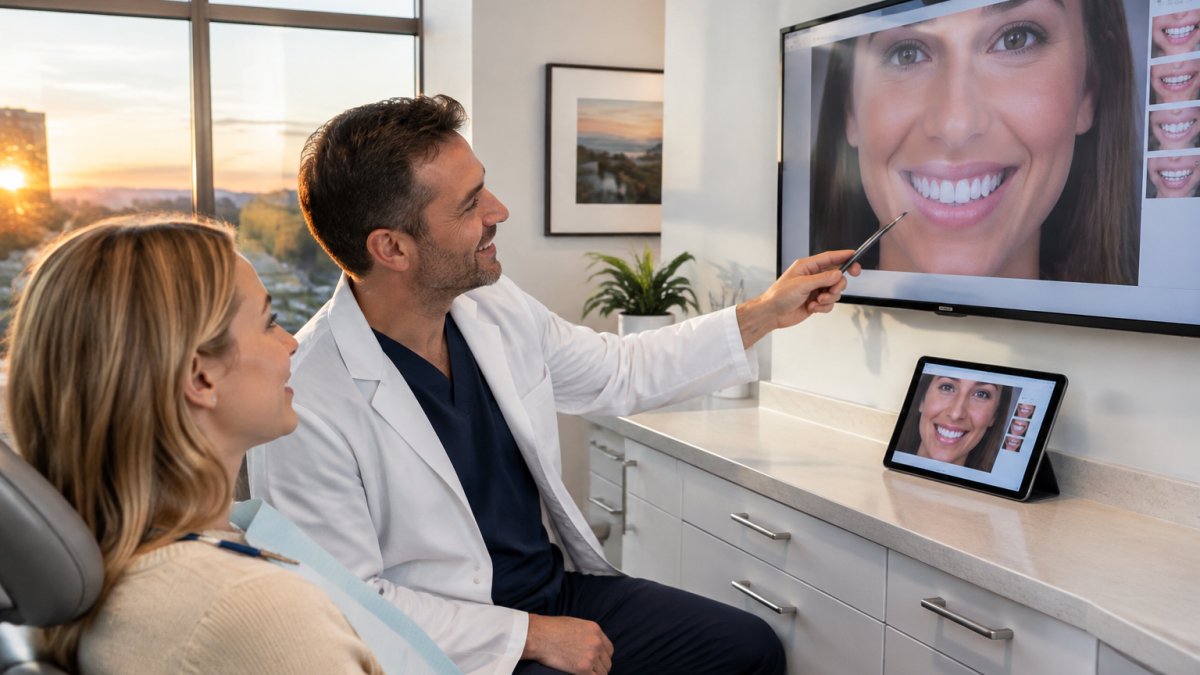
The category is growing fast. URBN Dental's cosmetic dentistry statistics puts digital smile design software at $1.83 billion in 2026 with 17.3% annual growth, and AI-driven planning tools are becoming standard rather than experimental. Academic work is tracking the same shift: a 2026 prospective study in PubMed Central compared AI-generated and expert-generated smile designs on esthetic outcomes, and a 2025 review of recent advances in cosmetic dentistry describes how digital and robotic tools add precision and customization to cosmetic workflows.
This is where SmileViz is built to work. You can see how the chairside simulator handles a live consultation.
One honest limitation: simulation quality depends on the photo you capture. Poor lighting or a bad angle weakens the result, so train the team on image capture before you blame the software.
Digital smile design software splits into three practical groups, and picking the wrong group is the most common buying mistake we see.
AI simulators win on conversion because they fit the appointment. Full design suites win on prosthetic feasibility and lab communication. Scanner tools win when the scan is already part of your workflow.
For a deeper head-to-head on speed, accuracy, and chairside fit, read our comparison of dental AI simulation software.
Dental case acceptance software is only worth its subscription if you can measure the lift. The problem is that most practices never define conversion precisely enough to measure it. Before you buy, write down the definition you will hold the vendor to: conversion is the percentage of presented cosmetic treatment plans that patients accept, tracked by dollar value and by case type. A single blended number hides the cases that actually pay for the software.
Track these separately, because they fail for different reasons and need different fixes:
Pull the raw counts from your practice management system, not from the software vendor's dashboard. Set a baseline period of at least 90 days before go-live, then compare the same 90-day window after adoption, holding seasonality constant by comparing year-over-year where possible.
Watch out: a launch-month lift is the most common false signal in this category, new tools get extra staff attention for four to six weeks, then revert, so judge the software on months three through six, not month one.
Vendor claims deserve scrutiny. One platform reports 3× lead-to-patient conversion and 87% case acceptance after video consultation, per Smile Virtual's cosmetic dentistry software page, though the source does not publish sample size or measurement period. A trade article cited by Rework's cosmetic dentistry revenue strategy claims practices using digital smile design report 30%-50% higher cosmetic case acceptance, again without disclosed methodology. Treat both as directional, not proven.
When a vendor quotes a lift, ask four questions before you believe it: What was the baseline, and was it measured in the same practice? What is the sample size and the measurement window? Was the comparison randomized or self-selected (practices that buy tools are often already motivated)? And is the metric acceptance rate, revenue per patient, or something else? A vendor that cannot answer all four is selling a story, not evidence.
Gains from chairside simulation and tighter follow-up vary by practice, so use your own baseline as the benchmark that matters. Use your own baseline as the only benchmark that matters, and treat published ranges as a sanity check rather than a target.
For the full metric set and a downloadable scorecard template, see our guide to dental case acceptance KPIs.
Cosmetic dentistry marketing software covers the path from website visitor to booked consultation. Most practices lose patients in the gap between an inquiry form and an actual appointment.
The strongest setups connect four pieces: lead capture on the site, a virtual consultation option, automated follow-up, and analytics that show which source produced which case. Our virtual consultation tool builds a branded lead page in about five seconds and answers the inquiry with a smile simulation.
Watch out: automated follow-up that fires generic texts for six weeks reads as spam. Cap sequences at three touches and make the second one personal.
Pricing depends on module, seat count, and what is bundled, and depends on your case volume. Check the SmileViz pricing page for current pricing and a quote. What we can do is show you how the cost structure works so you can compare quotes apples to apples.
Ask every vendor to break their proposal into these buckets, because a low subscription price often hides the other three:
Build a 24-month total cost of ownership model with these line items: 24 × monthly subscription at your realistic seat count; one-time implementation; any integration or connector fees; estimated training hours × your team's loaded hourly cost; and a support-tier upgrade if you expect to need priority response.
Watch out: the cost most practices underestimate is team training time, budget it as a real line item, not an afterthought, because a tool the team does not use has a 100% cost and a 0% return.
On integration, ask specifically how the tool syncs patient records, photos, and treatment plans with your PMS. "Integrates with" can mean anything from a nightly batch export to a true two-way API. Ask whether the sync is one-way or two-way, how often it runs, what happens to a record edited in both systems, and which PMS versions are certified. Manual double-entry erodes the time savings that justified the purchase, and a one-way export that overwrites chairside edits is worse than no integration at all.
On privacy, confirm how patient photos and simulations are stored and what consent language covers esthetic previews, since a simulation is a prediction, not a guarantee. Ask where the data is hosted, whether images are used to train vendor models, how long they are retained after a patient leaves, and how a patient requests deletion.
For a side-by-side look at how the major categories price and integrate, see our comparison of dental AI simulation software.
The gap between 20%-40% cosmetic case acceptance and what a well-run consultation can produce is the most expensive number in your practice.
SmileViz is built for exactly that moment: AI-powered smile simulation in seconds, designed for chairside use. Dentists and labs love SmileViz.
Book a SmileViz demo and bring a real case.
The practices that win on cosmetic case acceptance are the ones that make the decision easy to see.
Cosmetic dentistry software covers tools that support the cosmetic side of a practice: smile simulation, digital smile design, treatment plan presentation, patient communication, and marketing or lead capture. Some platforms bundle several of these functions, while others specialize. The category matters because cosmetic case acceptance sits at 20% to 40%, well below the 40% to 60% reported for general dentistry, so the tools that shape the consultation conversation have an outsized effect on revenue.
The biggest lever is visualization. When a patient sees a preview of their own smile during the consult, the treatment stops being abstract. Visualization tools are commonly associated with stronger cosmetic case acceptance, though results vary by practice. Software also shortens the gap between interest and booking by handling follow-up and online scheduling automatically, which matters most for treatment plans over $5,000, where acceptance often falls below 30%.
AI dental smile simulation software generates a preview from a patient photo, usually in seconds, so it can be shown chairside while the patient is still in the chair. SmileViz is built for exactly this: simulation designed for the consultation. Separate digital smile design tools produce more detailed plans but often take longer and require a technician, which changes how you use them in the workflow.
Integration varies by vendor and is one of the first things to verify before you buy. Real-time synchronization with your practice management system means patient records, appointment booking, and treatment plans stay consistent without manual re-entry. Ask specifically whether the tool syncs with the system you already run, what data conversion or database migration is involved at setup, and whether photos and scanned documents attach to the patient record automatically. If the answer is a workaround, price that labor into your decision.
Free tiers exist in the broader dental software market, but they typically limit simulations, remove analytics, or exclude integration, which undercuts the conversion features you are buying for. SmileViz offers a free trial rather than a permanent free tier, so you can test the chairside workflow on real consults before committing. Pricing depends on your practice size and plan; check the SmileViz pricing page for current figures and contract terms rather than assuming a typical cost.
Show patients their future smile in about 90 seconds and close more cosmetic cases chairside.
Book a free demo
AI smile previews that help patients say yes, before, during, and after the consult.
 Add smileviz.com as a preferred source on Google →